
DYNAMIC
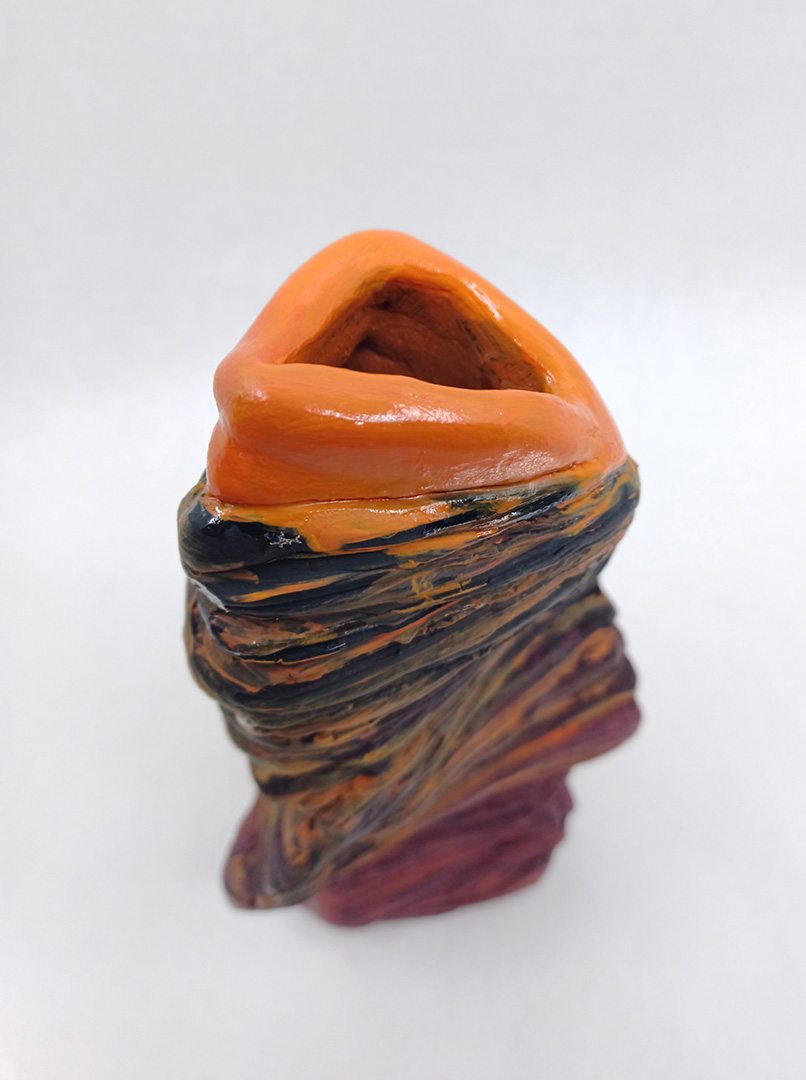
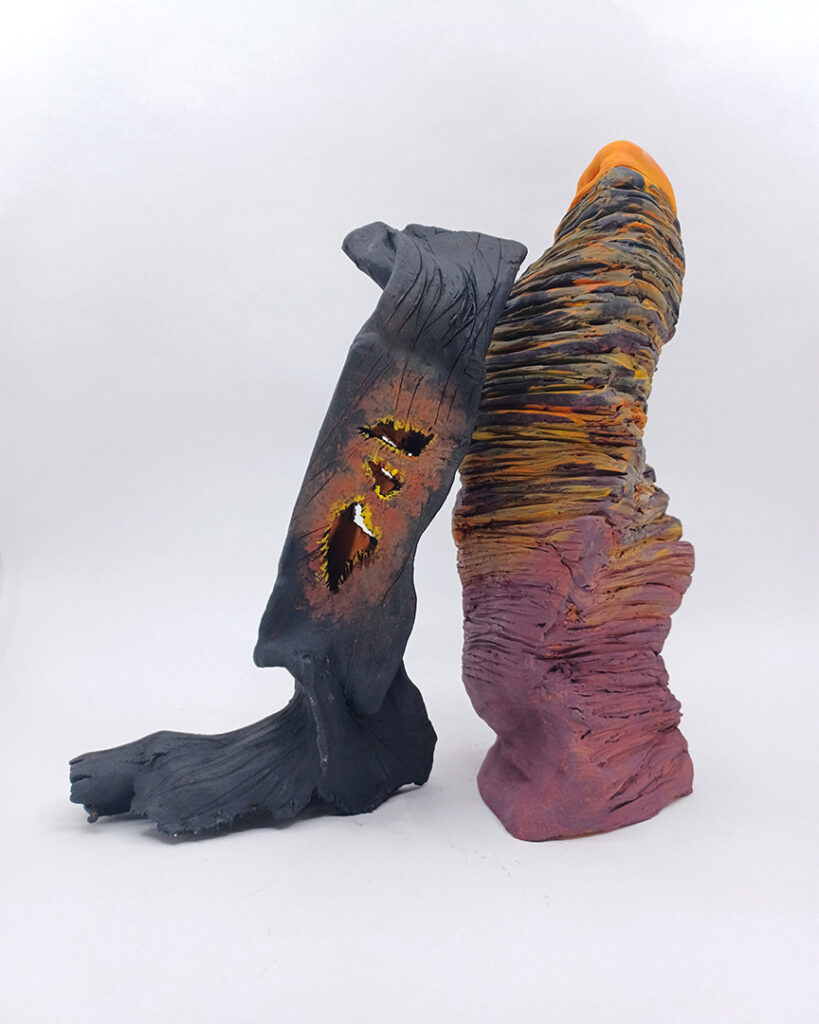
Centered on the idea of dynamic, this project focused on creating a visually dynamic earthenware piece through two building methods: coil and slab. There were certain requirements that had to be met; the completed form had to be hollow, at least 15 inches tall, and weighed under 15 lbs. when bone dry.
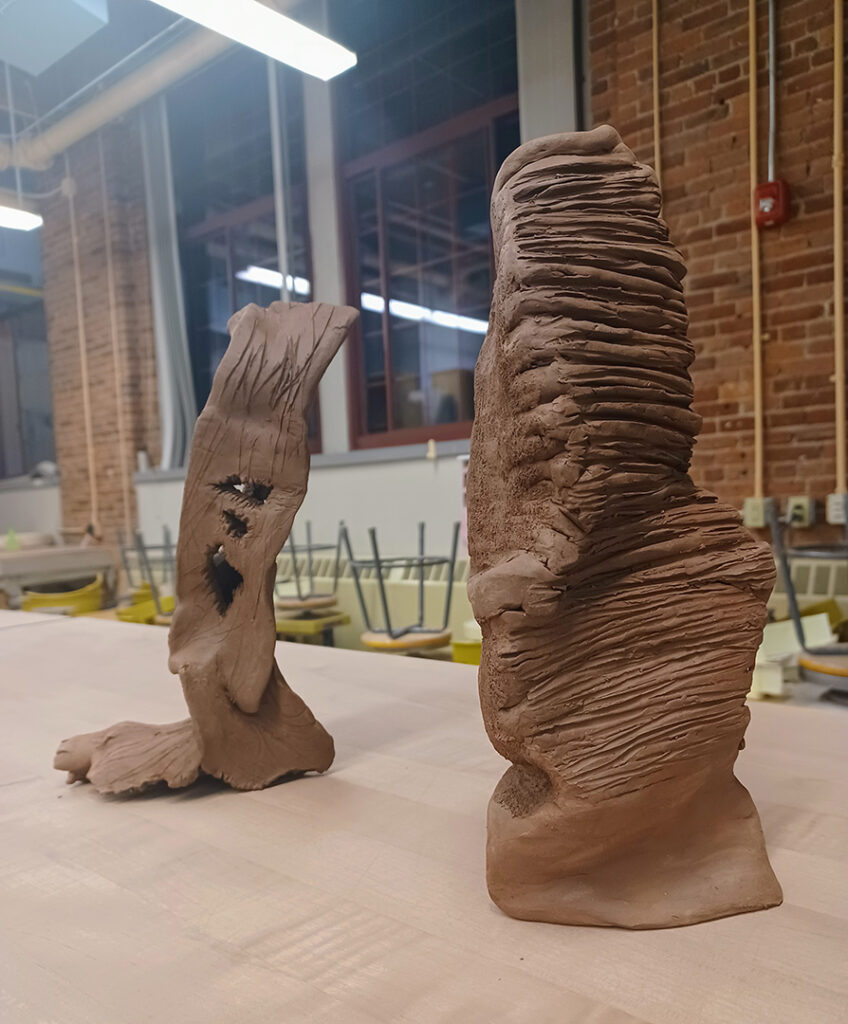
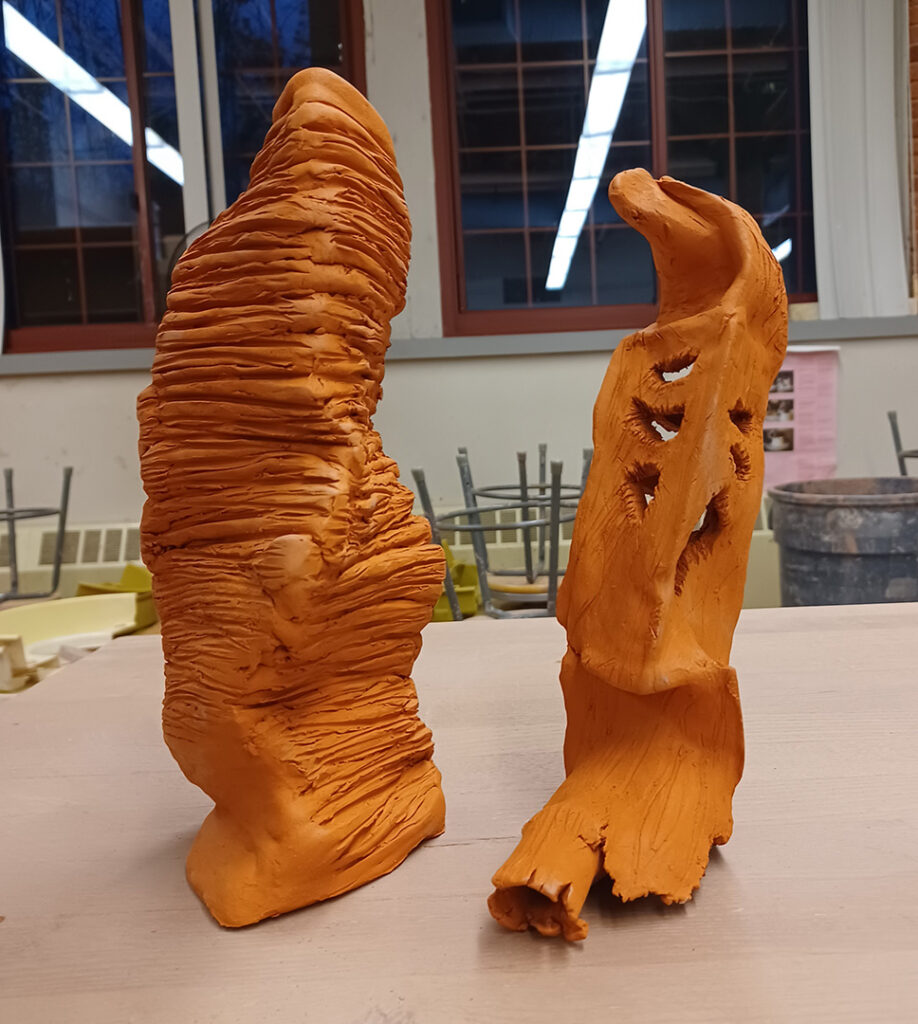
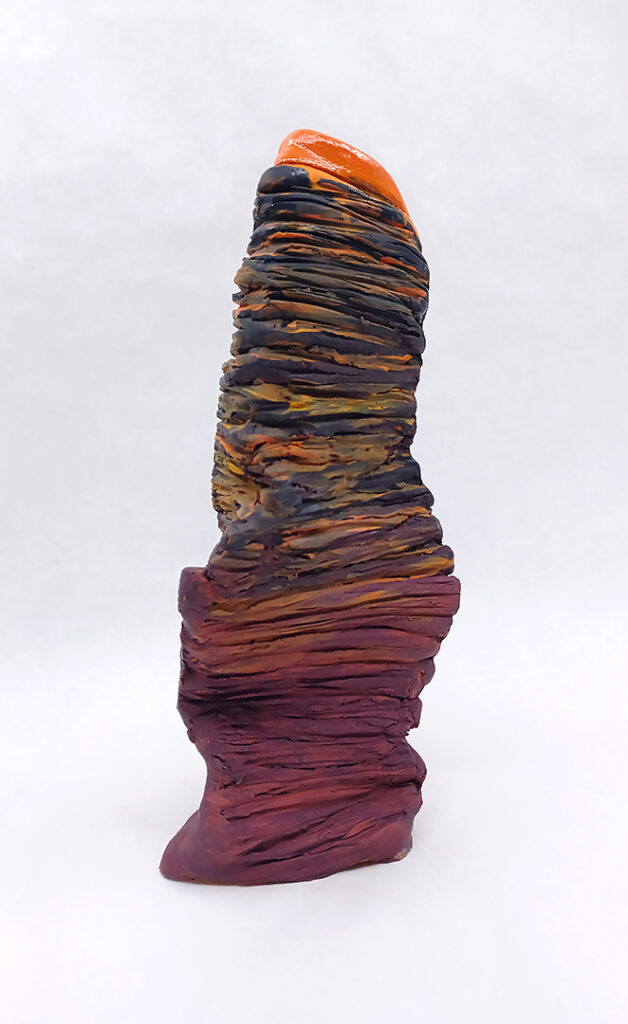
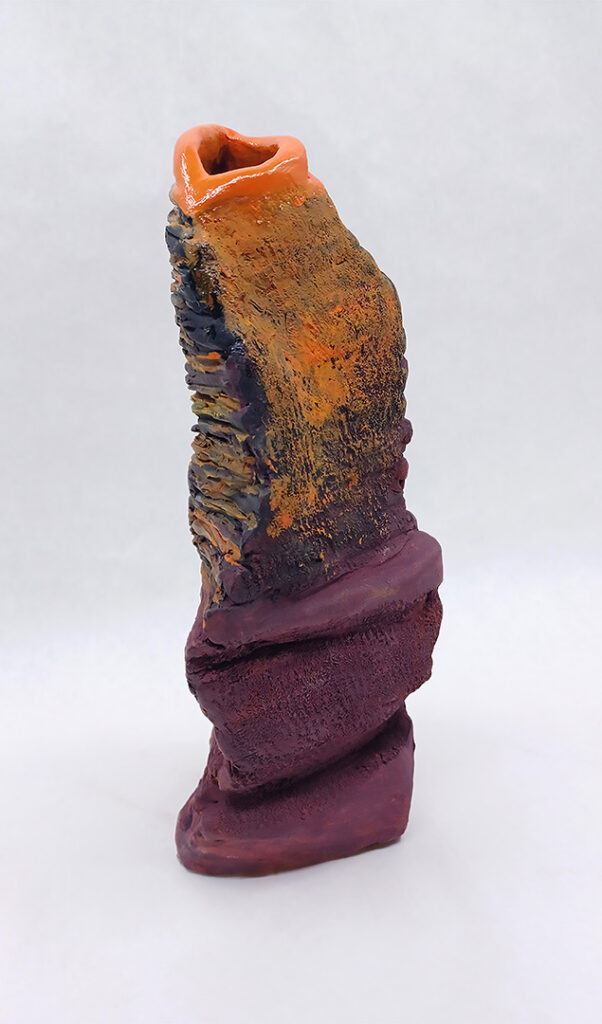
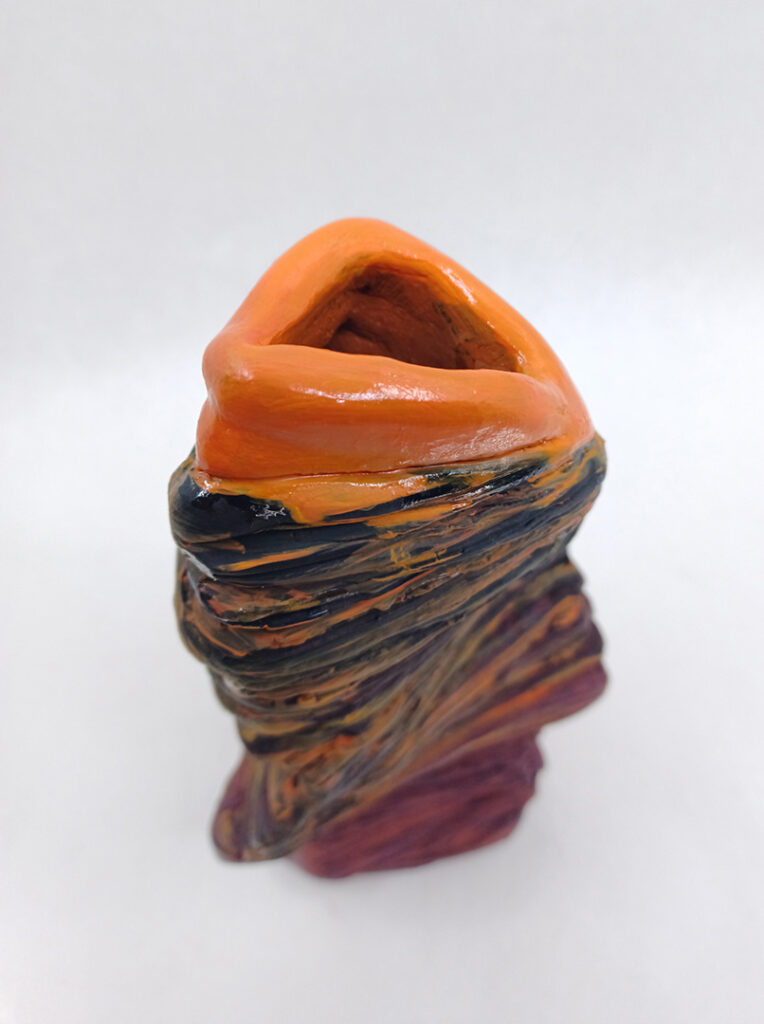
When I first started, I didn’t have the intention of combining both clay forms. I am not familiar with the actual term, but I envisioned a coil pyramid layered through triangles, slightly rotating the angle of each triangle to eventually create a spiral. This led to a structure that reflected that idea pretty well. Realizing that not smoothing out the outside surface makes a ribbed texture, I decided to push it even more by making more with the actual rib tool, only leaving the lip untouched.
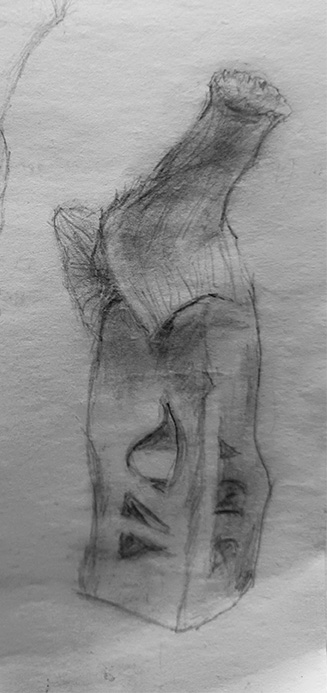
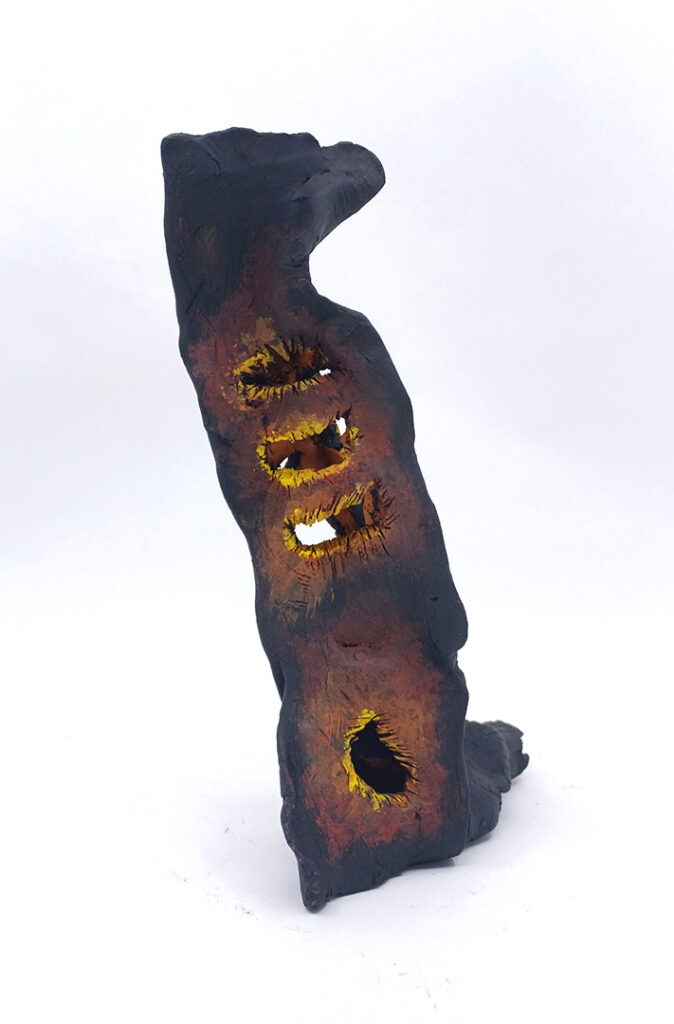
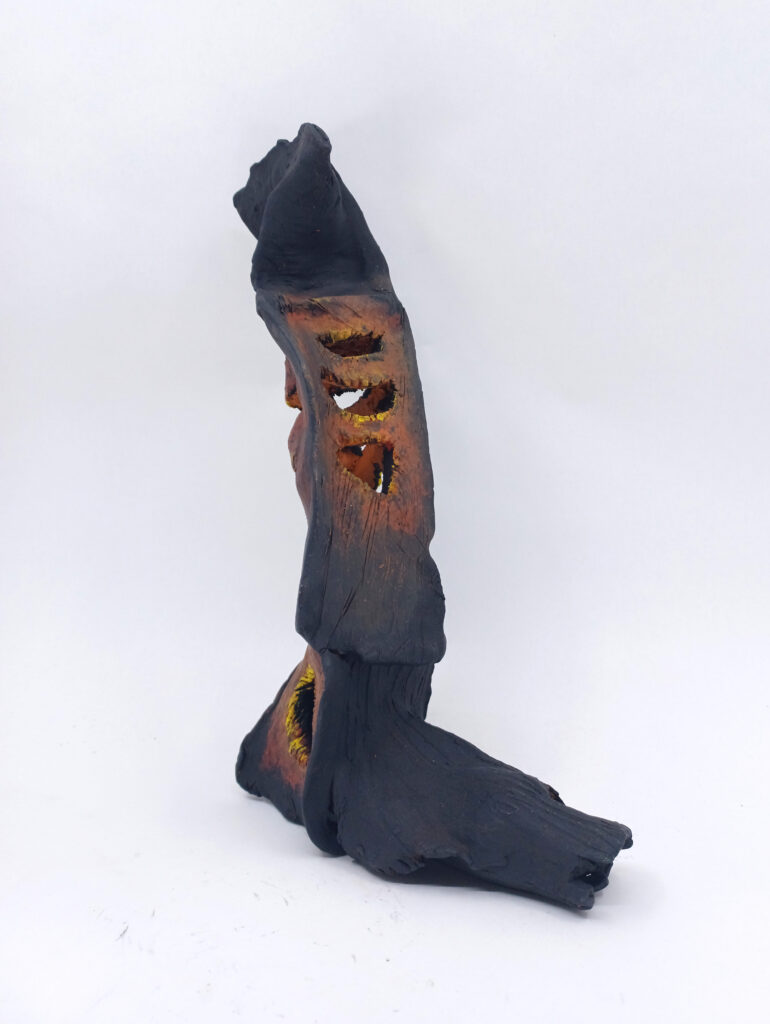
For my slab piece, I strictly wanted to focus on form. Sharp edges, protruding joints, that is what I saw in my clay body. This sketch depicts the product’s appearance after the bisque firing. Seen throughout, there are jagged cutouts to add to the theme of roughness. In addition, a knife was used to chip crevices into all inner edges and score texture into the material with crisp hacks and scratches.
When it came to how I wanted to finish my pieces, I felt that painting them with acrylics made more sense than glazing. With glaze, the “fiery” look I imagined wouldn’t have looked as good as the original. I also thought that it would also take away from the textures. Sticking to warm hues, I placed bright streaks of color across the ribs on my coil form in order for them to pop out even more, finishing off with orange at the very top. At a first glance, it appears as lava spilling out of a volcano. Moving on to my slab form, emphasizing the cutouts with bright colors as well seemed like the most fun approach. Also, since I believe that this is important to mention, the decision to put a glossy finish on the primary areas actually came from our class critique. I never knew that it was an option to do this, but I am glad that I did.
Overall, this entire project was a process of adapting and experimentation. The main challenges I had to overcome were issues of balance. In my coil form, there were moments where the constant layering of wet clay caused it to collapse on itself. The ideal solution would have been to let it slightly harden, but instead, the final decision was to flip the entire piece vertically. I found this to be just as effective as this solution worked for my slab form, which ran into the same problem.
Gallery
1 thought on “Dynamic Form”
Comments are closed.