
PRODUCTION
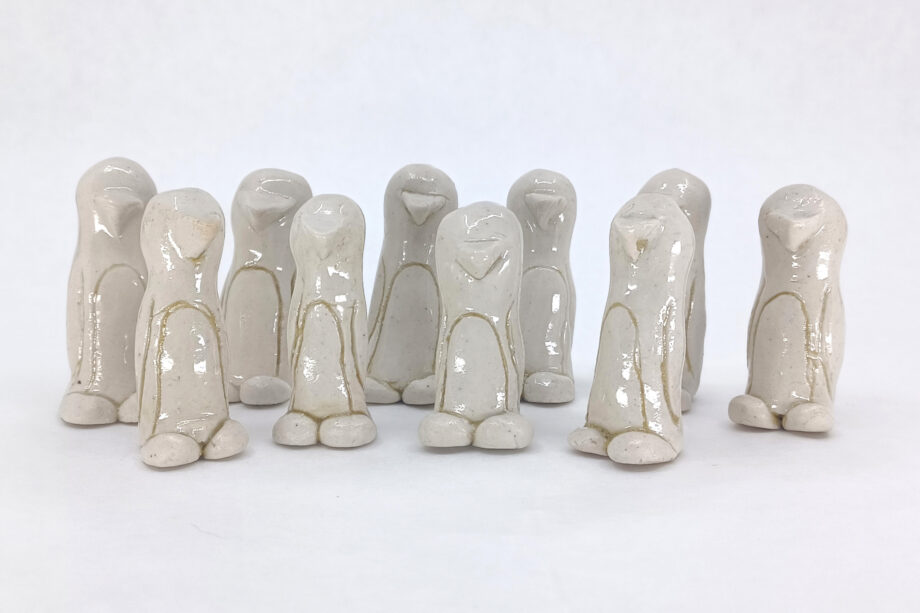
A part of creating art that every artist needs to eventually face is how they will generate income from their work. So, in this project, the goal was to create 10 products that considered the following: the amount of time and effort it took to make them, the intended audience, and the amount of money you are willing to sell them for. Unlike our past projects, these items would have been made with stoneware, a high-fire clay, and finished with the glazes we experimented with in Glaze Tests.
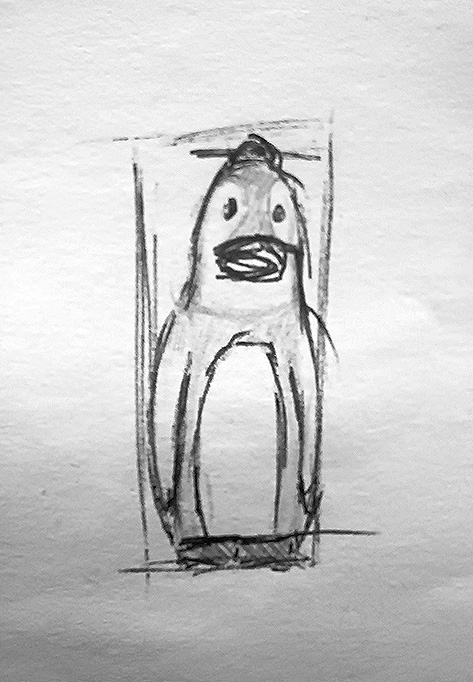
Since Christmas is approaching soon, the first thing that came to mind were miniature penguin figurines. Having just learnt how to make clay tubes, I figured that the easiest and time-efficient way to grind out these penguins would be to roll out one long tube about 3/4″ inches in diameter and cut it into the 10 pieces that I needed. Afterwards, I could just manipulate them to take the form of a penguin. Also, since I didn’t have to worry about flippers since they could be shape them into the body with a wooden knife, the only additional things I really had to make were the feet and beak. Depending how fast I went, the whole process for one figurine took 10-15 minutes.
As you can see, the forms came out as expected as they captured the gesture of an actual penguin although remaining static in the positioning of the limbs and overall pose.
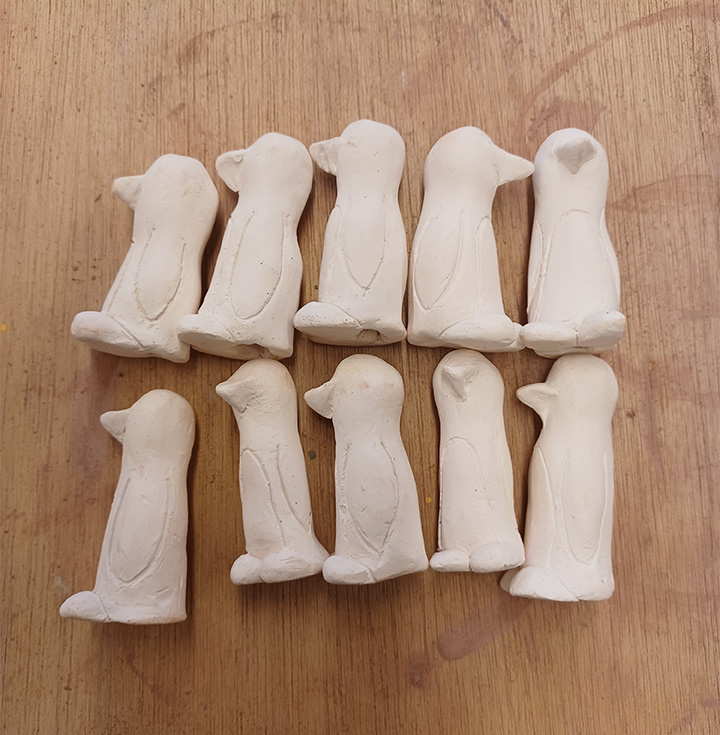
One thing that I noticed about the stoneware was that it attracted other materials very easily. Even though I tried to keep my workspace clean, traces of earthenware still appeared in my clay body. Although, since they were going to get glazed anyways, it wasn’t much of an issue.
When it came to finishing, there was a certain dark brown recipe that one of my peers had found. Containing volcanic ash, it had unexpected results throughout the entire process. Starting with the mixture itself, it was very thick and grainy. Maybe because I didn’t let it sit for 24 hours, but the glaze acted like a casing for the figurines. As one could tell, that wasn’t the ideal situation, so I ended sponging off the excess material until only a thin layer was left. Since the original test tile for the glaze was a glossy black, I thought that adding clear glaze wouldn’t affect the under layer as much, which also ended up not being the case. After the glazing firing, I was surprised to see that the penguins emerged as a cream color with brown glaze emphasizing crevices.
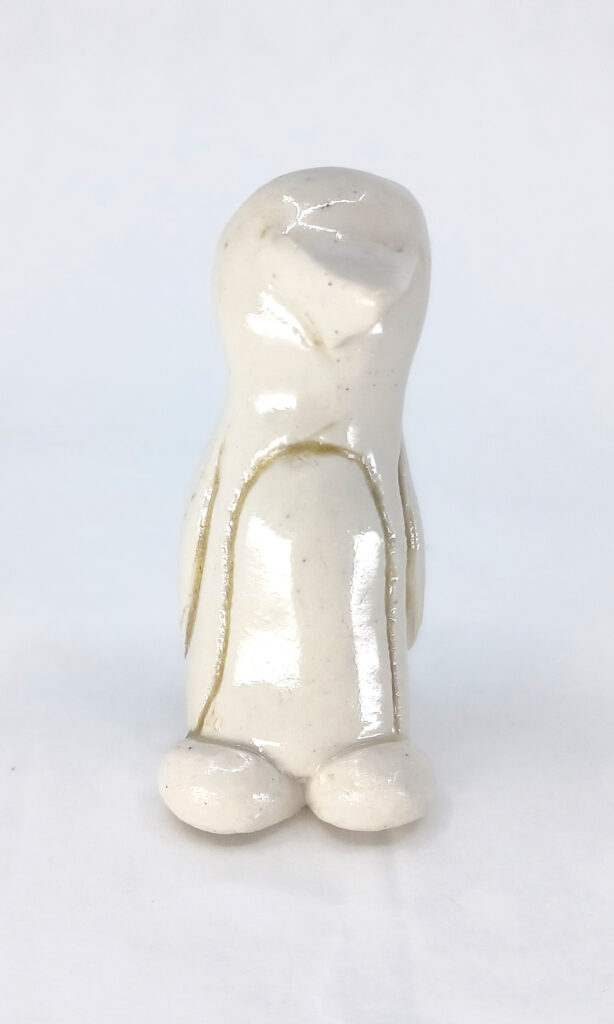
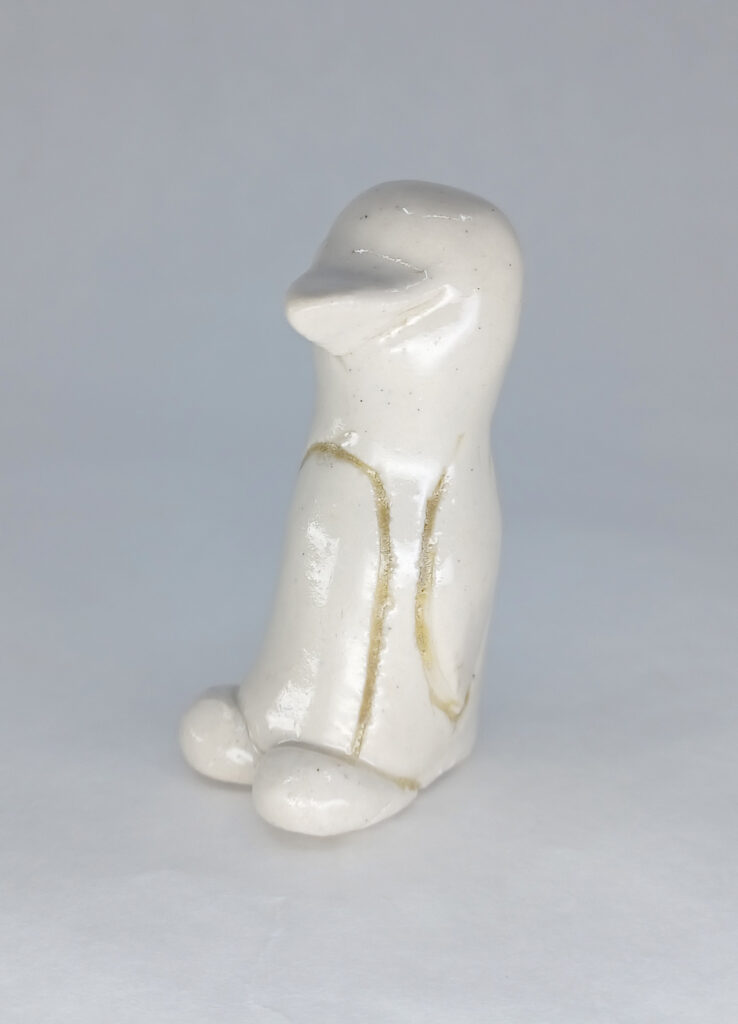
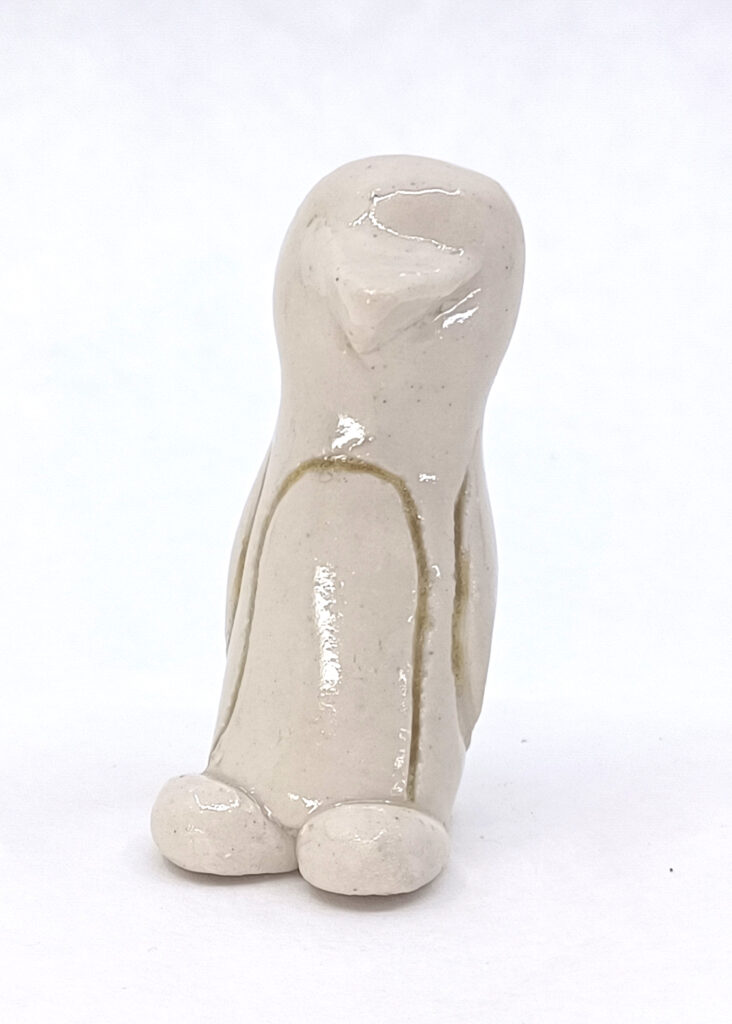
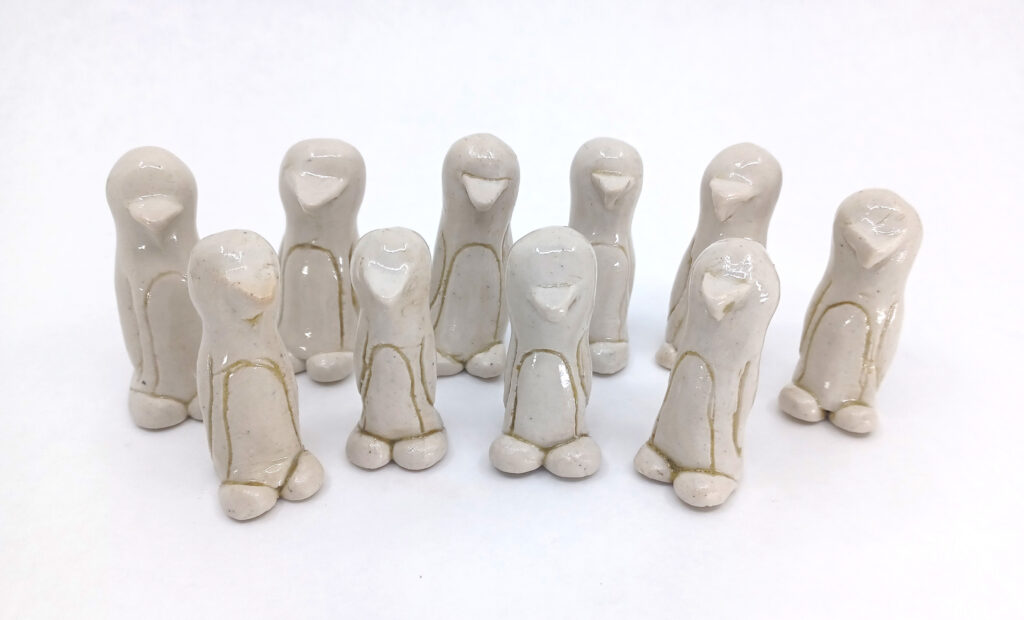
While I haven’t decided pricing yet, I believe that the price I choose will properly reflect the time and effort needed to complete these products.
Beginning with the equipment I utilized, there were not any tools I used outside of a kiln and a basic ceramic kit. Majority of the task was done with my bare hands. Going back to how long the greenware process took, it was an estimated 10-15 minutes per product. I say estimated because I didn’t create one figurine at a time. Rather, I readied my materials and worked on multiple products at once, completing one step for each piece then moving onto the next. As I learned the best approach, the process eventually got quicker.
Glaze on the other hand, was different as I made one of the glazes from scratch. Finding the materials, making the mixture, and finally applying it to the products was a time-consuming process. The cost of materials itself is something to consider when deciding a price. Since they were not my own, it doesn’t apply to this situation, but it would be completely different if I had to buy my own supplies. This goes for the electricity cost, the kiln, and tools as well.