
“L’etat, c’est moi”
– King Louis XIV
Art, like a mirror, reflects the individual it captures. Also, like a mirror, it can be manipulated to depict a fictitious reality. Evidently, the royalty and other elites of the 16th century recognized this advantageous truth and decided to use art to flaunt their superiority in their respective societies.
Travelling to Europe, our first exploit of art persuasion occurs during the Baroque & Rococo periods by France’s extravagant ruler, King Louis XIV.
Also known as the self-proclaimed “Sun King”, Louis XIV often aligned himself with the greats that came before, and his belongings reflected it as well. His palace Versailles was in fact created to serve as a symbol of Louis XIV’s supremacy, even going as far to having it and “its massive gardens built along an East/West axis so the sun would rise and set in alignment with his home” (Ropeik). On its classical-based interior, it had large amounts of art that promoted his excellence, such being a portrait that captured his liking by his primary painter, Hyacinthe Rigaud.
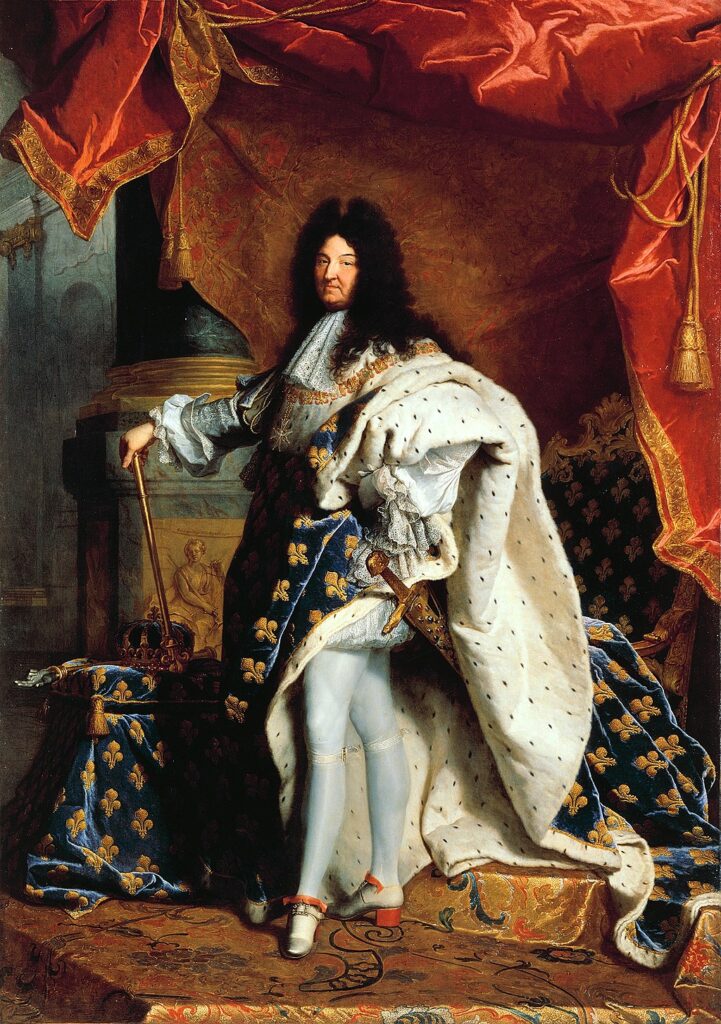
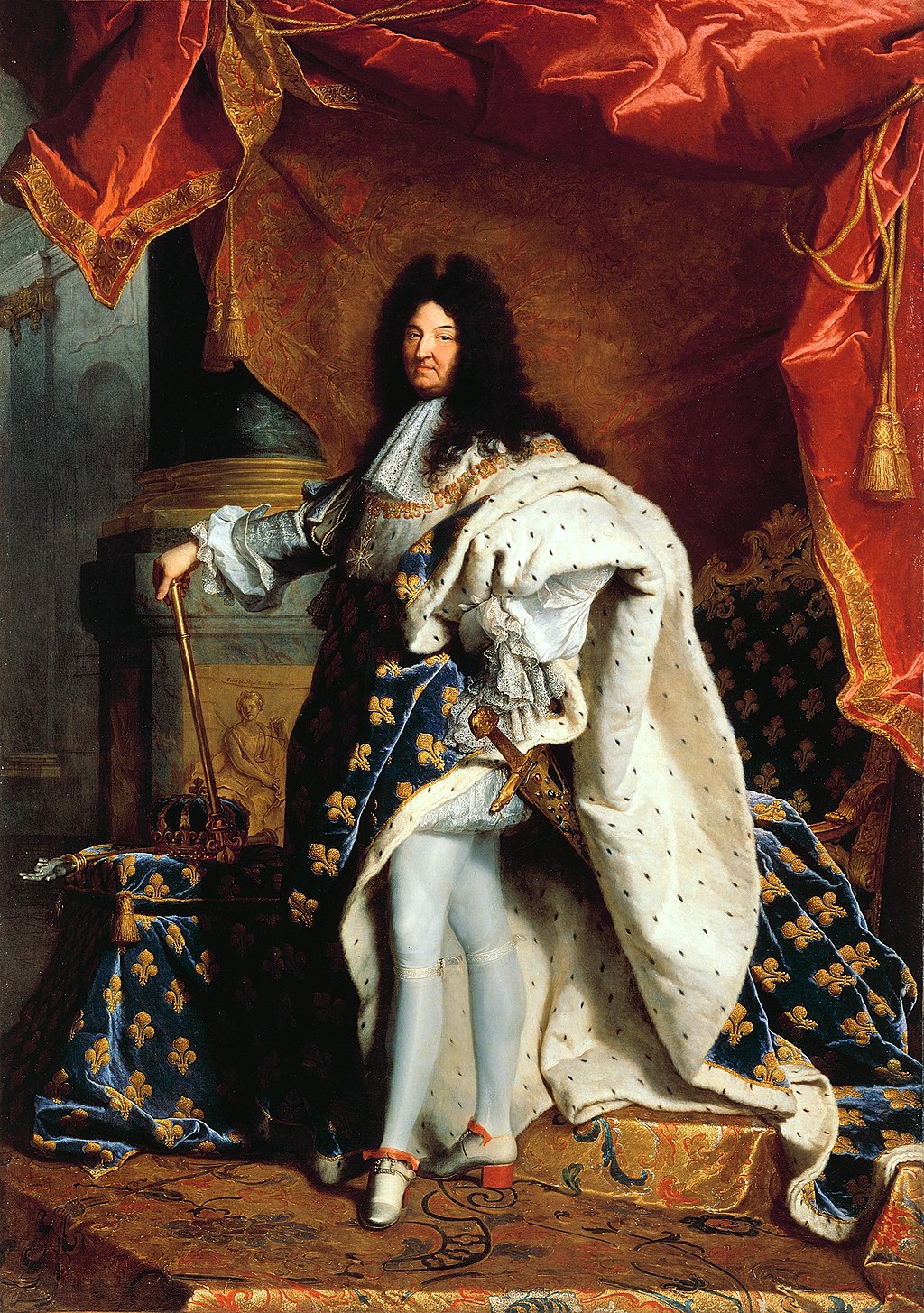
Everything about this portrait showcased his dominance. Beginning with his visage, the viewer can see the pridefulness of his facial expression as he cast a confident gaze, as he should with the exquisite robe draped around him and the gilded marble column in the background, “symbolizing the strength of the monarch while again recalling the classical era” (Fleming). Moving on to his stance, he is positioned in a way that allowed him to look down on the viewer. However, what was actually concealed by this pose was Louis XIV’s short stature, which he further cloaked with his visible high heels and tall wig.
Rigaud, Hyacinthe. Louis XIV of France. c.1701. Paris, France. (source)
Capturing a nation through an artistic snare…
Naturally, the monarchs of Europe weren’t the only ones suspect of this tactic as it was seen in the regions of Asia as well.
After the British Empire invaded India in the 16th century, the cultural landscape immediately transformed as the British asserted their dominance over their new territory. Rather than respecting the current traditions of the cities, foreign influence (Neo-Classical/Gothic styles of Britain) instead merged with the native architectural styles to form what was known as the “Indo-Saracenic Revival”. This collision was very important since it was assumed that “architecture under European colonial rule [was] an emblem of power designed to endorse the occupying power” (Lumen). The strength of Britain was also displayed in the art in the area, as new art schools were established to educate artisans about better art from the Western hemisphere.
To recap, the effects of art deemed very valuable to the elite class in many places during the Middle Ages, especially the 16th century, as monarchs and other powerful organizations used artistic means to increase and/or preserve their might in ways they saw fit. Reinforcing religious ideals, boasting one’s ego, or simply cementing one’s status after national conquest, art provides sanctity to those who are able to control it correctly.
Resources:
- www.khanacademy.org/humanities/ap-art-history/early-europe-and-colonial-americas/reformation-counter-reformation/a/chteau-de-versailles
- www.khanacademy.org/humanities/renaissance-reformation/baroque-art1/france/a/rigaud-louis-xiv
- courses.lumenlearning.com/boundless-arthistory/chapter/india-under-british-imperialism/