Project Description:
Creating a 3D object in Autodesk Fusion 360, and then outputting that object on one of the Ultimaker 3D printers in the Makerspace
Process:
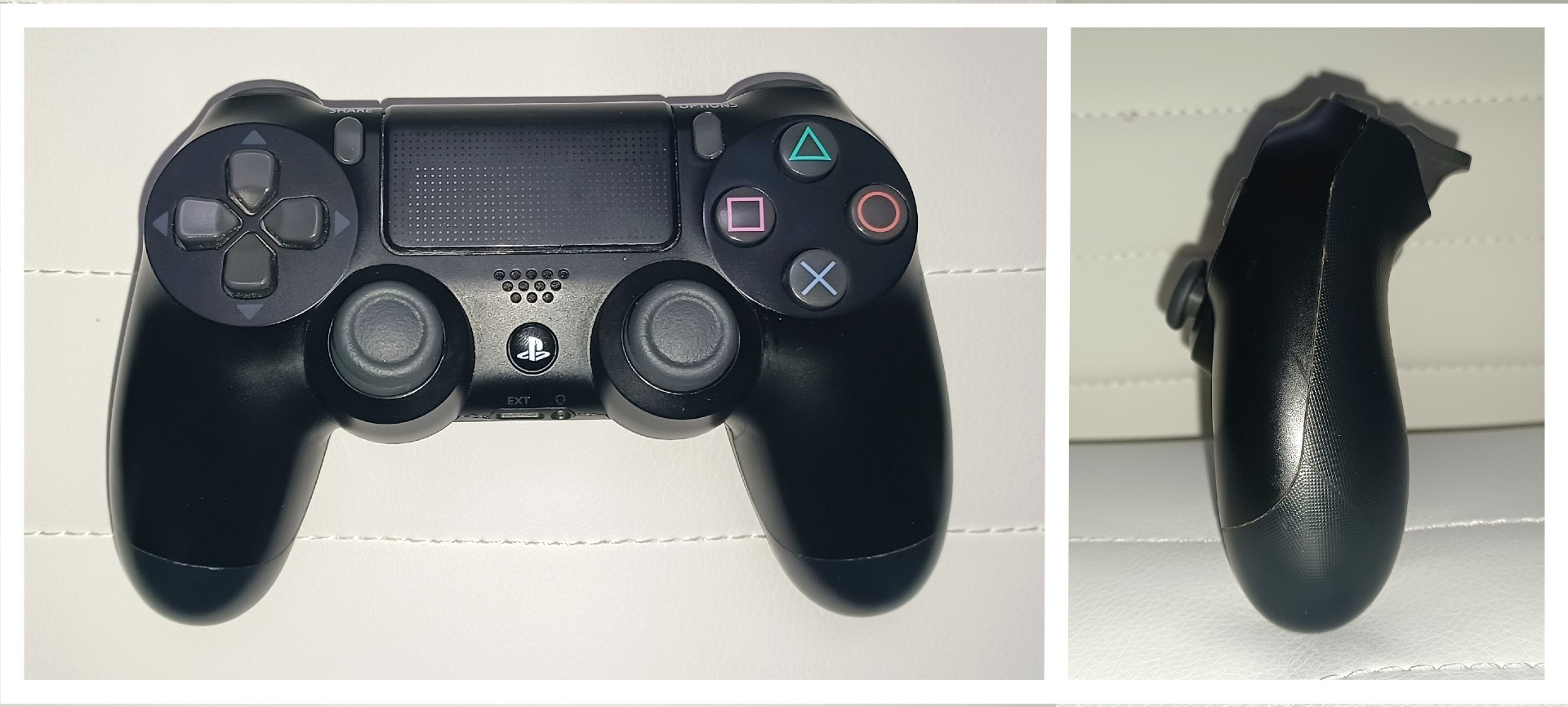
“The item that I chose to replicate was a DualShock 4 Controller. The significance behind this object runs deep, as it truly introduced me to the gaming community.”
I had designed with C.A.D. software previously in high school, so it wasn’t foreign to me. However, Fusion 360 was more complicated than what I was used to.
Onshape, my former software, allowed the user to move the perspective and/or the body with certain key shortcuts and the mouse, easing the process. With Fusion, every function was more complex.
Presented below is a time lapse of the controller’s transformation. The parts that were the most difficult to form were the arms. Being the weird shapes they were, it took multiple renovations to make them resemble their official counterparts.
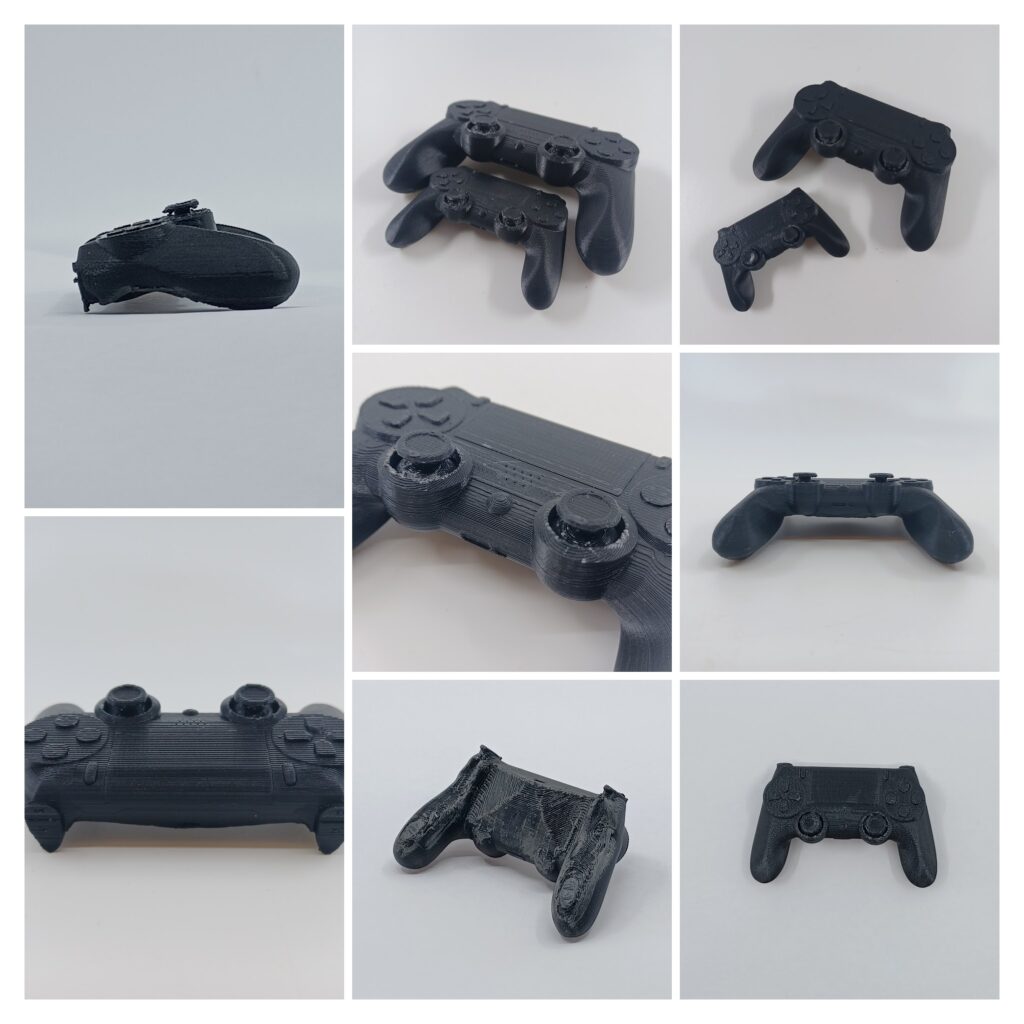
Once completed, the first 3D print came out roughly around a 1 x 0.5 x 2.5-inch ratio. This prototype took an hour and 15 minutes to print. It was smaller than expected, especially since it was the right size on Fusion. The only problem was that the extrusions on the controller’s buttons weren’t visible due to its size. To fix this, another four hours was taken to recreate the form at a 150% scale.
Final Observations:
As a whole, the time it took to create this piece is depicted in its final result. Compared to an actual DualShock controller, my 3D print is a close replica. Appearing in a smaller scale, the texture formed by the repeating back and forth motion of the printer adds more appeal to the form, especially in the joysticks. If one looks closely, one can see the circular pattern of layers. All the edges in general increases the aesthetic.
I believe the black material was the right choice for the color as it hides most of the imperfections that occurred during the removal process. Any other hue would only draw the viewer’s eye to the scratches.